Video Archive Digitization: A Guide for Cultural Institutions
Every year, thousands of hours of irreplaceable video content move closer to permanent loss. Magnetic tapes degrade. Playback equipment disappears. The institutional knowledge required to identify, locate, and contextualize archival footage fades as staff retire. For museums, broadcasters, national archives, and universities, the question is no longer whether to digitize video collections but how quickly it can be done before the window of opportunity closes.
This guide covers the full digitization journey, from assessing what you have to making it discoverable, with a focus on how modern AI tools are reshaping what is possible for cultural institutions of every size.
The Urgency of Digitization
Degrading Physical Media
Magnetic videotape was never designed for permanent storage. Standard VHS tapes begin to lose signal quality within 10 to 25 years, depending on storage conditions. Professional formats like Betacam SP and U-matic fare somewhat better, but even these are subject to oxide shedding, sticky-shed syndrome, and print-through effects that worsen with time.
The chemistry is unforgiving. Once a tape has degraded beyond a certain threshold, no amount of restoration can recover the lost information. Institutions that delay digitization are not simply deferring a project; they are accepting incremental, permanent destruction of their holdings.
Obsolete Formats and Equipment
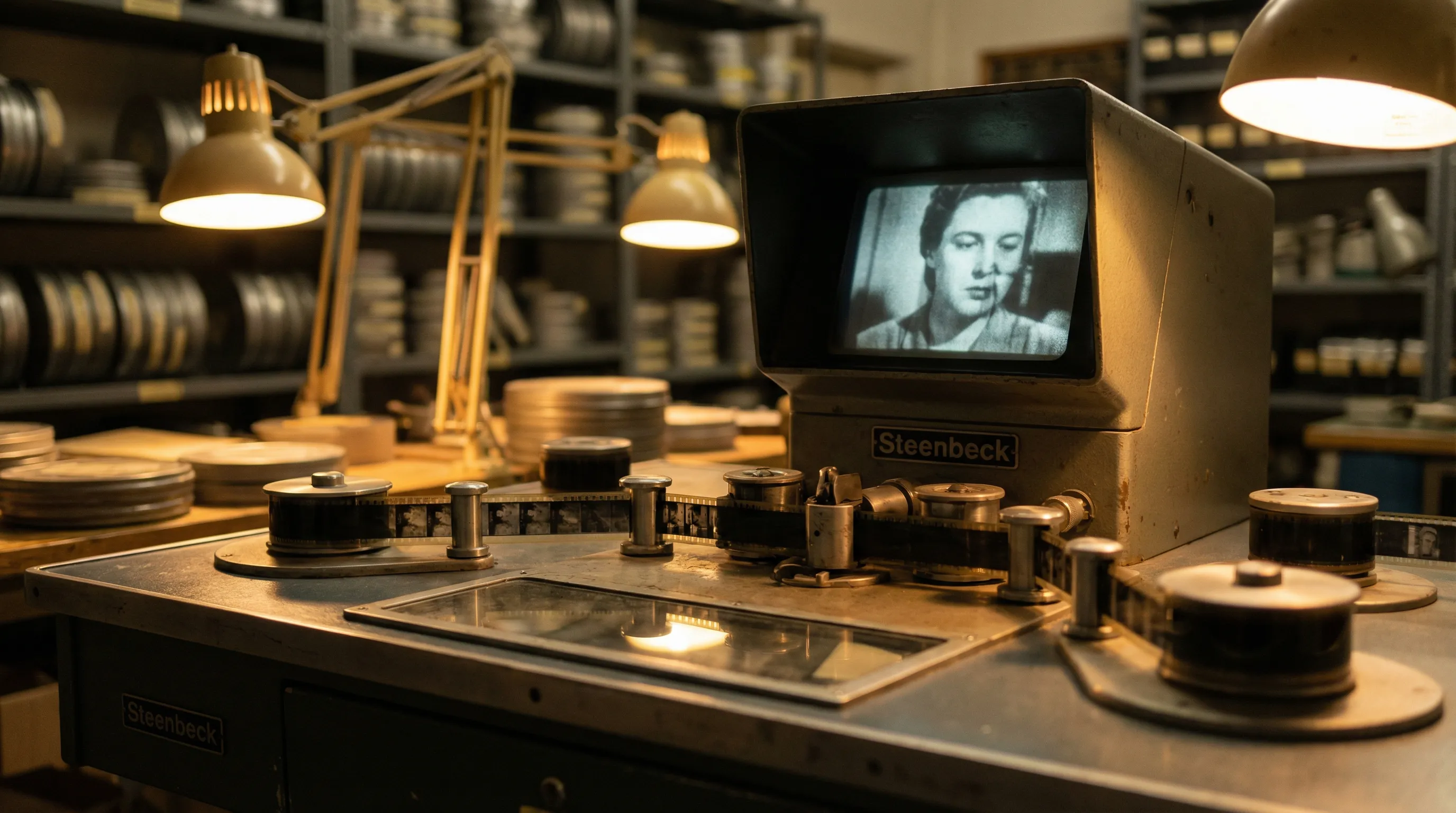
Even when tapes remain in playable condition, finding functional equipment is an escalating challenge. Manufacturers stopped producing most tape-based video players years ago, and the specialized technicians who can maintain and repair these machines are a shrinking group. The cost of servicing vintage playback equipment rises every year, and at some point, a broken machine may simply be irreparable.
Cultural institutions often hold collections spanning multiple formats: 2-inch Quadruplex, 1-inch Type C, Betacam, Betacam SP, Digital Betacam, U-matic, VHS, S-VHS, Hi8, MiniDV, and DVCAM, among others. Each format requires its own playback hardware, adding layers of complexity to any digitization project.
Institutional Knowledge Loss
Perhaps the most overlooked risk is the loss of contextual knowledge. The people who shot the footage, edited the programs, and cataloged the tapes carry irreplaceable understanding of what the archive contains. When a long-serving archivist or producer retires, their knowledge of which tape holds a particular interview, which shelf contains the coverage of a specific event, or what the cryptic label on a cassette actually means often leaves with them.
Digitization is not just about preserving images and sound. It is about capturing and encoding the context that makes archival content meaningful.
The Digitization Process
Step 1: Collection Assessment and Inventory
Before any tape touches a playback deck, the collection needs a thorough assessment. This involves:
- Physical inventory: Counting and identifying every item, noting format, physical condition, and any existing labeling or catalog information.
- Condition grading: Evaluating each tape for visible damage, mold, warping, or other signs of deterioration. Tapes in poor condition may need conservation treatment before playback.
- Format identification: Cataloging the specific formats present so that the appropriate playback equipment can be sourced or rented.
- Priority ranking: Not every tape can be digitized at once. Institutions need to prioritize based on content value, condition urgency, and institutional goals.
A thorough assessment prevents costly surprises mid-project and ensures that the most at-risk and most valuable content is addressed first.
Step 2: Preparation and Conservation
Tapes that have been stored for decades often need preparation before they can be safely played. Common treatments include:
- Baking: Tapes suffering from sticky-shed syndrome (where the binder that holds magnetic particles to the base film absorbs moisture and becomes tacky) can be gently heated in a controlled environment to temporarily restore playability.
- Cleaning: Specialized tape cleaning machines remove dust, debris, and loose oxide particles that could damage playback heads or cause dropouts during transfer.
- Splicing repairs: Broken or deteriorated splices need to be replaced before the tape can run through a machine.
These steps require trained personnel and should not be improvised. Incorrect handling can cause further damage.
Step 3: Transfer and Capture
The actual digitization involves playing each tape on calibrated equipment while capturing the signal as a digital file. Key decisions at this stage include:
- File format: Uncompressed or lightly compressed formats (such as FFV1 or JPEG 2000 for video, and BWF for audio) are recommended for preservation masters. These maintain maximum quality for future use.
- Resolution and bit depth: Capture should match or exceed the original format's resolution. Standard-definition content should be captured at its native resolution, not upscaled.
- Signal path: Professional digitization uses direct SDI or component connections rather than composite signals wherever possible, preserving the maximum quality from the source.
- Quality monitoring: Operators should monitor the transfer in real time, watching for dropouts, tracking errors, audio synchronization issues, and other problems that may require a second pass.
Step 4: Quality Control
Every digitized file should undergo quality control review. This includes:
- Checking for complete transfer (no missing segments at the beginning or end)
- Verifying audio and video synchronization
- Identifying and logging any artifacts from the source tape (dropouts, glitches, color errors)
- Confirming that file metadata (duration, format specifications, checksums) is accurate
Quality control is time-consuming but essential. Discovering a problem months or years after the original tape has been returned to storage (or has further degraded) means the opportunity for a clean transfer may be gone.
Step 5: Metadata Enrichment
A digitized file without metadata is a needle in a haystack. Basic technical metadata (format, duration, date of transfer) is captured automatically, but descriptive metadata is what transforms a collection of files into a usable archive. This includes:
- Content description: What does the footage contain? Who appears in it? Where and when was it recorded?
- Rights information: Who owns the content? What usage restrictions apply?
- Provenance: Where did the tape come from? What collection or series does it belong to?
- Relationships: How does this content relate to other items in the archive?
Traditionally, metadata enrichment has been the most expensive and time-consuming part of the digitization process. This is where AI is making the most dramatic impact.
How AI Transforms Digitized Archives
Automatic Transcription and Indexing
Once video content is digitized, AI-powered speech recognition can transcribe every spoken word automatically. For archives containing interviews, news broadcasts, lectures, oral histories, and documentary footage, this is transformative. A collection that would take years to transcribe manually can be processed in days.
The transcripts serve dual purposes: they provide a text-based record of the content, and they create a searchable index that allows researchers to find specific moments based on what was said rather than relying on manually created summaries.
Visual Analysis and Scene Detection
Modern computer vision models can analyze video frame by frame, identifying people, locations, objects, activities, and scene changes. For archival content, this means:
- Automatic detection of scene boundaries, making it easy to navigate long tapes that contain multiple segments
- Identification of recurring individuals across a collection (critical for oral history and news archives)
- Recognition of locations, landmarks, and settings
- Detection of on-screen text, graphics, and titles
Automated Cataloging
By combining transcription, visual analysis, and contextual understanding, AI systems can generate draft catalog records for digitized content. These records are not perfect and should be reviewed by archivists, but they provide a substantial starting point that reduces the manual effort from hours per item to minutes.
Platforms like WIKIO AI integrate these capabilities into a single workflow: upload a digitized file, and the system automatically generates transcripts, identifies key content elements, and creates searchable metadata. For institutions facing backlogs of thousands of hours, this acceleration is the difference between a collection that sits on a server and one that is genuinely accessible.
Making Archives Accessible and Searchable
Digitization and metadata enrichment are means to an end. The ultimate goal is access: enabling researchers, educators, journalists, curators, and the public to discover and use archival content.
Semantic Search
Traditional archive search relies on matching keywords in catalog records. If the archivist did not use the specific term a researcher is searching for, the content remains hidden. AI-powered semantic search understands meaning rather than just matching words. A search for "student protests in the 1970s" can surface relevant footage even if the catalog record describes it as "campus demonstrations, 1968 to 1975."
Clip-Level Access
Researchers rarely need an entire two-hour tape. AI-powered indexing enables access at the clip or even sentence level, allowing users to jump directly to the relevant moment within a long recording. This precision dramatically increases the utility of archival content.
Remote Access and Collaboration
Digital archives can be accessed from anywhere, enabling collaboration between institutions and making collections available to researchers who cannot travel to the physical archive. Properly managed digital access systems include rights management, usage tracking, and access controls to protect sensitive content.
Preservation Best Practices
Digitization is itself a preservation activity, but the digital files also require active management to remain accessible over time.
The 3-2-1 Rule
Maintain at least three copies of every file, on at least two different types of storage media, with at least one copy stored off-site. This protects against hardware failure, site-level disasters, and media obsolescence.
Format Migration Planning
Digital formats can become obsolete just as tape formats did. Institutions should select widely adopted, open-standard formats for preservation masters and plan for periodic format migration as technology evolves.
Checksum Verification
Regular integrity checks using checksums (such as MD5 or SHA-256) detect bit rot and file corruption early, before data loss becomes irreversible.
Documentation
Every decision made during the digitization process should be documented: equipment used, signal path, operator notes, quality control findings, and any issues encountered. This documentation is itself part of the archival record and provides essential context for future users of the digital files.
Unlocking Decades of Hidden Content
Many cultural institutions are sitting on extraordinary collections that are effectively invisible. Tapes labeled with cryptic codes, stored in basements and warehouses, unseen for decades, may contain footage of historic events, interviews with significant figures, documentation of communities and traditions that have since changed beyond recognition, and creative works that deserve a new audience.
Digitization, combined with AI-powered discovery tools, offers the opportunity to unlock this content at a scale and speed that was unimaginable even five years ago. The technology exists today. The question for cultural institutions is whether they will act while the tapes can still be played or wait until the content is gone.
WIKIO AI provides the AI-powered infrastructure that transforms raw digitized content into searchable, accessible, and enriched collections. For institutions beginning or expanding their digitization programs, integrating AI from the start ensures that every digitized hour becomes a discoverable, usable asset from the moment it enters the system.
The clock is ticking on physical media. But for institutions that move now, the reward is extraordinary: decades of hidden history, made accessible to everyone.